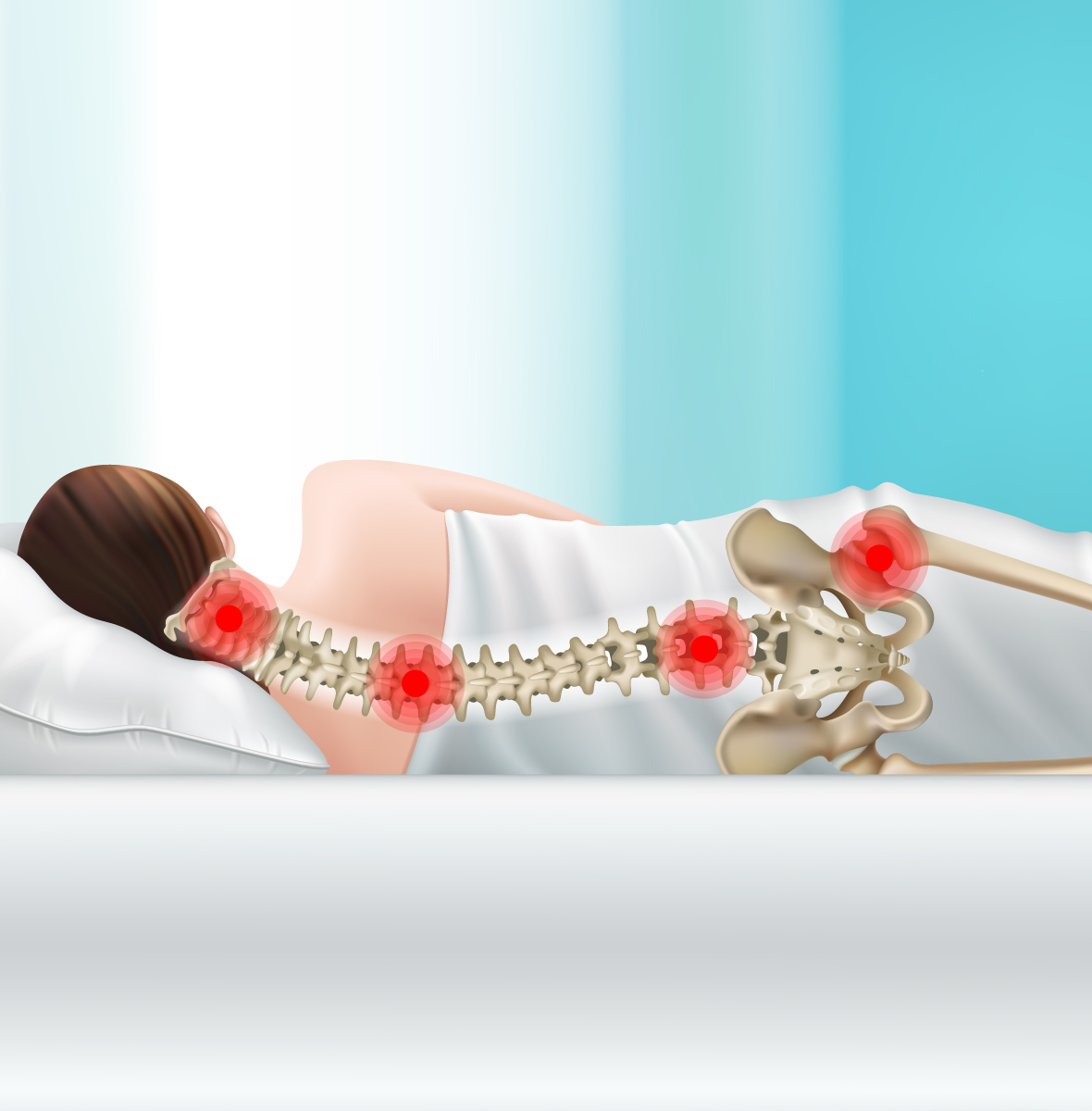
Sleep is when the spine finally gets a chance to rest, recover, and decompress after long hours of work, caregiving, and daily physical demands. But the way you sleep directly influences how effectively your spine recovers.
For many women, poor sleep position is the hidden reason behind morning stiffness, shoulder pain, neck tightness, or recurring low back discomfort.
Here’s a guide approved by trained professionals that provides a clear understanding of how each sleeping position affects spinal alignment and how to choose a posture that truly supports a healthy spine.
1. Sleeping on Your Back: Best for Neutral Alignment
Back sleeping supports a natural “S-curve” of the spine and distributes weight evenly.
Why does it help?
- Reduces neck and lower back strain
- Keeps shoulders relaxed
- Minimizes unnecessary spinal rotation
How to make it better?
- Use a thin-to-medium pillow under the head, which usually covers the top border of the shoulder blade (note: pillow is for the neck, not for the head)
- Place a small pillow under the knees to reduce lumbar pressure.
Ideal for women with:
- Chronic low back pain
- Neck stiffness
- Postural imbalances from long sitting hours
2. Sleeping Sideways: Good for the Spine, Better for Breathing
Sleeping sideways is the most common sleeping position among women and offers stable spinal alignment when supported correctly.
How does it help?
- Keeps the spine long and supported
- Reduces snoring and improves breathing
- Less stress on the lower back
How to make it better?
- Place a pillow between the knees
- Use a pillow that fills the space between the ear and the shoulder
- Avoid curling into a tight fetal position
Ideal for women with:
- Lower back or SI-joint irritation
- Pregnancy (left-side preferred)
- Hip tightness or mild scoliosis
3. Stomach Sleeping: Hardest on the Spine
Sleeping face down forces the neck to twist and the lower back to overarch.
- The neck is rotated for hours, irritating joints
- Lumbar spine collapses into hyperextension
- Chest and shoulder pressure restrict normal breathing mechanics
“Best to avoid if you already have neck pain, disc issues, or morning stiffness.”
What should you do if you cannot change this sleeping position?
- Place a thin pillow under the pelvis
- Use the slimmest possible pillow under your head
Mattress & Pillow Matter More Than You Think
Women often experience hormonal shifts, muscle fatigue, and ligament laxity at different life stages, making mattress support even more important.
Guidelines to follow for Mattress Selection:
- A medium-firm mattress keeps spinal curves supported
- Memory foam or hybrid options reduce pressure points
- Avoid using a spring mattress as much as possible as it can be counterproductive for your spine
- Replace pillows every 12–18 months
A mismatched mattress or pillow can offset even the best sleeping posture.
Red Flags to Look After to Correct Sleep Position?
If you regularly wake up with the conditions below, your sleeping posture or bed support likely needs adjustment.
- Morning neck stiffness
- Shoulder heaviness or numbness
- Lower back ache in the first hour of the day
- Pain that reduces once you start moving
Research Insight
Sleep posture impacts spinal stiffness, disc hydration, and muscle recovery. Studies show that neutral-supported sleeping reduces morning pain intensity and improves spinal mobility compared to unsupported or rotated postures.
CSSH Insight
Your spine heals the most when you sleep, but only if you sleep in alignment. Small changes in posture, pillow height, and mattress support can significantly reduce daily pain and improve energy levels.
Authored by :
Varsha Gadaley
Sports Physiotherapist, CSSH