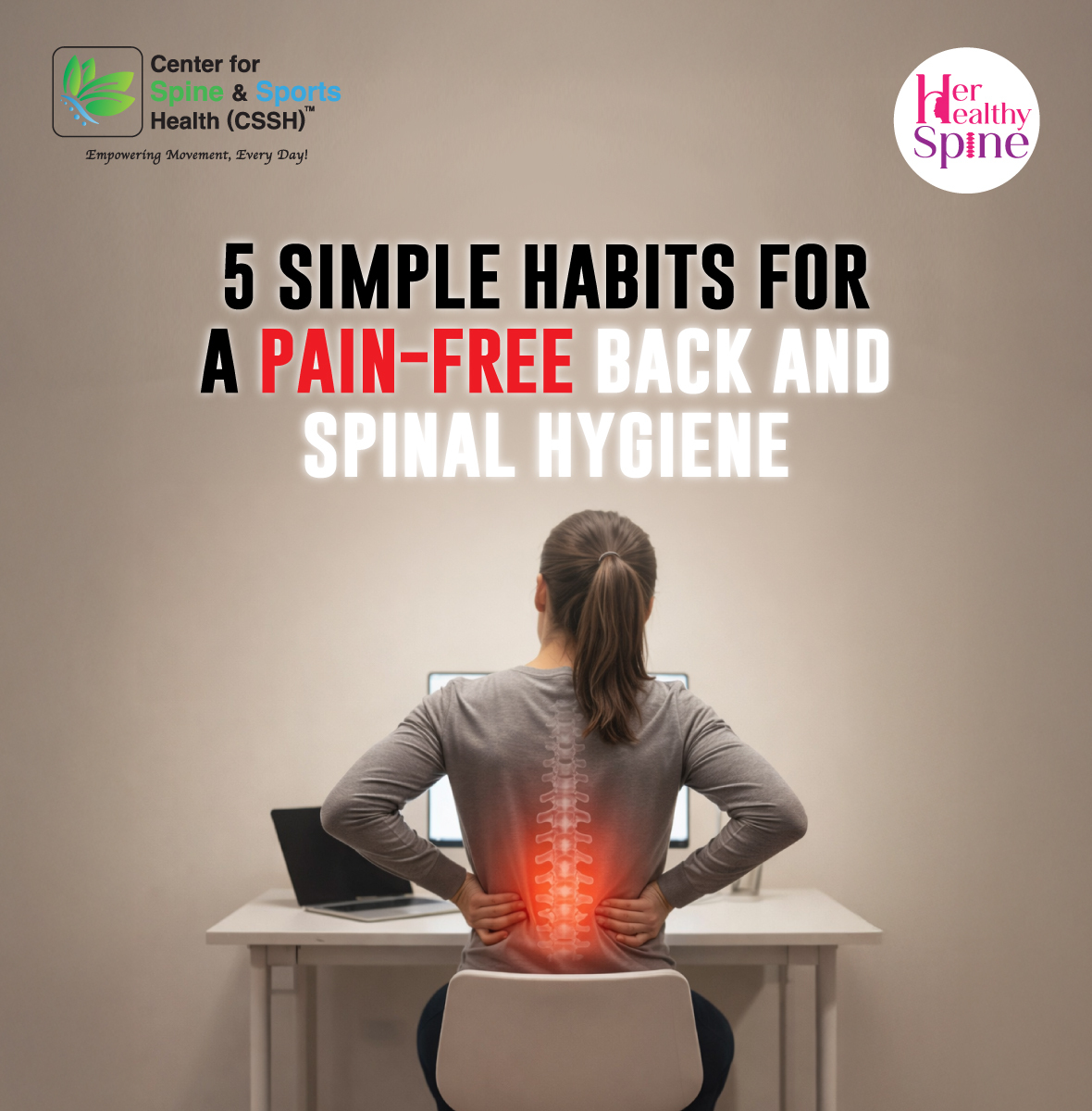
Spinal hygiene is the everyday maintenance routine your back muscles need. Just like brushing your teeth prevents cavities, simple daily spine habits help prevent stiffness, disc strain, and chronic back pain.
For women balancing work, home responsibilities, and long hours of sitting or standing, these small habits act as a protective layer, helping the spine remain mobile, strong, and resilient.
The good news is that spinal care does not require complex workouts. These five simple habits can be integrated into any routine and take just 5–10 minutes a day, with no equipment required.
1. Morning Mobility: Gently ‘Wake Up’ the Spine
Your spine becomes slightly stiff overnight. Gentle movement in the morning helps reduce pressure on spinal discs and prepares the body for the day ahead.
During sleep, spinal discs absorb fluid and slightly increase in height. While this is healthy, it also makes the spine a little stiffer in the morning and more sensitive to sudden bending or lifting.
A short sequence of controlled movements helps redistribute fluid, loosen stiff joints, and activate stabilizing muscles.
Try this:
- Cat–Cow – mobilizes the entire spine through flexion and extension
- Pelvic Tilts – reactivates deep core stabilizers
- Supine Knee Drops – releases tightness in the lumbar and pelvic region
Benefits
- Reduced morning stiffness
- Easier bending throughout the day
- Less discomfort during work and travel
Why does it work?
These gentle movements improve joint lubrication, help spinal discs redistribute fluid, and activate stabilizing muscles that support the spine.
Research Insight
Morning mobility routines have been shown to reduce perceived stiffness and improve functional movement throughout the day, particularly in individuals with sedentary lifestyles.
2. The 30–30 Rule: Reset Your Posture Every 30 Minutes
Long periods of sitting or standing create what is known as static load fatigue. This occurs when muscles become tired from maintaining a single posture for too long.
As muscles fatigue, the spine begins relying more on passive structures like ligaments, which are not designed to support prolonged loads.
Regular movement helps redistribute spinal load, improve circulation, and reactivate stabilizing muscles such as the multifidus.
Try This
Every 30 minutes, take 30 seconds to reset:
- Stand up and walk a few steps
- Rotate your spine gently
- Roll your shoulders back and open your chest
Why does it work?
These micro-breaks reactivate spinal stabilizers and reduce ligament strain that often leads to postural back pain.
Research Insight
Studies show that short movement breaks significantly reduce spinal compression while also improving productivity and comfort during prolonged work hours.
As many experts say: movement is medicine.
3. Core Check-In: 60 Seconds of Stability
When it comes to spine health, endurance matters more than strength.
Deep core muscles such as the transversus abdominis, multifidus, and pelvic floor provide continuous low-level support that keeps the spine stable during everyday activities.
A short daily core routine can significantly improve spinal stability.
Try This
- Dead Bug – beginner-friendly and ideal for people with lower back discomfort
- Bird Dog – improves coordination and spinal control
- Modified Plank – builds safe core endurance without compressing the spine
Benefits
- Better posture without conscious effort
- Less fatigue during long work hours
- Reduced risk of lower back flare-ups
- Improved pelvic alignment
Why does it work?
These exercises activate deep stabilizing muscles without placing excessive load on the spine.
Research Insight
Research shows that core endurance is a stronger predictor of back pain prevention than core strength, highlighting the importance of consistent daily activation.
4. Load Smart: Protect Your Spine During Daily Tasks
Everyday activities such as lifting groceries, picking up a child, or carrying bags place cumulative stress on the spine.
Poor lifting mechanics can create shear forces that strain discs, ligaments, and spinal joints.
Being mindful of how you move during routine tasks can significantly reduce injury risk.
Try This
- Bend at the hips and knees, not the waist
- Keep objects close to your body
- Switch bag sides frequently
- Avoid twisting while lifting
- Engage your core before lifting heavier items
Why does it work?
These simple adjustments reduce spinal load and limit shear forces that can lead to strain or injury.
Women may be slightly more prone to certain back issues due to pelvic alignment differences and ligament flexibility, making proper lifting mechanics even more important.
Research Insight
Awareness-based lifting techniques have been shown to reduce back injuries by up to 30% in working adults.
5. Evening Unwind: Release Tension Before Bed
Throughout the day, gravity, posture, and stress gradually accumulate tension in the spine — particularly in the neck, mid-back, and hips.
Taking a few minutes in the evening to release this tension can improve sleep and reduce next-day stiffness.
Try This: 3-Minute Unwind Routine
- Child’s Pose – gently decompresses the lumbar spine
- Hip Flexor Stretch – reduces pelvic tightness from prolonged sitting
- Thoracic Rotations – restores mobility to the mid-back
Benefits
- Better sleep quality
- Reduced neck and back tension
- Easier mornings with less stiffness
- Improved posture over time
Why does it work?
These stretches release tight areas that commonly influence lower back mechanics, particularly the hips, chest, and mid-back.
Research Insight
Evening mobility routines have been associated with reduced next-day pain perception and improved sleep efficiency.
When Should You Seek Help?
If you experience:
- Pain lasting longer than 2–3 weeks
- Pain radiating to the legs or arms
- Numbness, tingling, or weakness
- Pain that disturbs sleep
- Persistent morning stiffness
It may be time for a spine, joint, muscle and entire musculoskeletal assessment to identify underlying causes and develop a personalized spine care plan.
CSSH Insight
Spinal hygiene is not a workout routine, it is a daily lifestyle practice. Small, consistent habits give your spine the mobility, stability, and recovery it needs to support every role you perform. With just a few mindful minutes each day, most women can maintain a strong, resilient, and pain-free spine well into later life.
Authored by :
Varsha Gadaley
Sports Physiotherapist, CSSH