Every woman’s spine tells a story of strength, change, and adaptation. From the pressures of long working hours to hormonal shifts, pregnancy, and daily multitasking, the female body constantly seeks balance.
Women today are more health-aware than ever, yet back and neck pain remain extremely common due to desk-work culture, hormonal influences on connective tissue, pregnancy-related changes, and household workload patterns.
Both Yoga and Pilates offer tremendous benefits, but they are not interchangeable, and each serves different spinal needs. While both build control, understanding how they influence the spine helps you make an informed, body-specific choice.
At CSSH, our goal is to help you choose the most scientifically appropriate movement practice based on your spine, lifestyle, and phase of life.
Before comparing, it’s important to understand the female spine:
- A wider pelvis alters different lumbopelvic mechanics
- Greater ligament laxity because of hormonal variations (especially during the menstrual cycle & pregnancy)
- Higher risk of osteoporosis in post-menopausal women because there will be a decline in bone density after menopause
- Increased thoracic kyphosis
- Pregnancy and postpartum changes challenge core stability
So, all these factors create more stress-related tension in the pelvic floor, diaphragm, and neck. It makes the combination of core stability, postural strength, and breathing mechanics essential.
The Yoga Approach
Yoga blends movement, breath, and mindfulness. Yoga focuses on breath, flexibility, mind-body awareness, and overall mobility. It encourages the spine to move fluidly while calming the nervous system, a combination that promotes healing beyond the physical body. For the spine, Yoga can help with:
- Improving flexibility
- Reducing stress-based muscle tension
- Enhancing breathing capacity & parasympathetic tone
- Mind-body relaxation
- Fascial hydration through slow flow and holds
Yoga is especially beneficial for women, who:
- Feel stiffness or stressed
- Have anxiety or sleep disturbances
- Experience PMS-related muscle pain
- Wish to calm the nervous system after long screen time
Research Insight
Studies show Yoga improves mobility, and mental well-being in chronic low-back pain, often with long-term effects due to nervous-system modulation.
⚠️Cautions
- Hyperflexibility, along with Yoga, can aggravate lax ligaments
- Deep forward bends can irritate discs
- Repeated spinal rotations may stress joints if the technique is poor
- Women with osteopenia/osteoporosis should consider avoiding strong flexion routines
The Pilates Approach
Pilates was designed to strengthen the body from its centre — the “powerhouse.”
It trains the deep core, stabilizes the pelvis, and restores postural control, making it particularly effective for spinal health.
Pilates emphasizes core control, breathing, spinal alignment, hip stability, and strength training.
Key benefits:
- Builds deep core activation and stability
- Improves Pelvic stability & core strength
- Improved postural endurance and spinal alignment
- Controlled spinal mobility
- Better neuromuscular control
Especially beneficial for women who:
- Sit for long hours at the desk
- Have a weak core or glute
- Postpartum women (with guidance)
- Have recurring lower-back or neck pain
- Need structured strength with resistance-based training
Research Insight
Pilates consistently improves core strength, lumbar stability, and posture, and reduces chronic low-back pain by improving deep abdominal muscle activations.
⚠️ Cautions
- Must learn proper breathing (lateral rib breathing)
- Avoid advanced moves early if hypermobile
- Needs a trained instructor, not general gym classes
Ideal Pilates for the Spine
Pilates strengthens the scaffolding of your spine. They help movement to be supported and effortless.
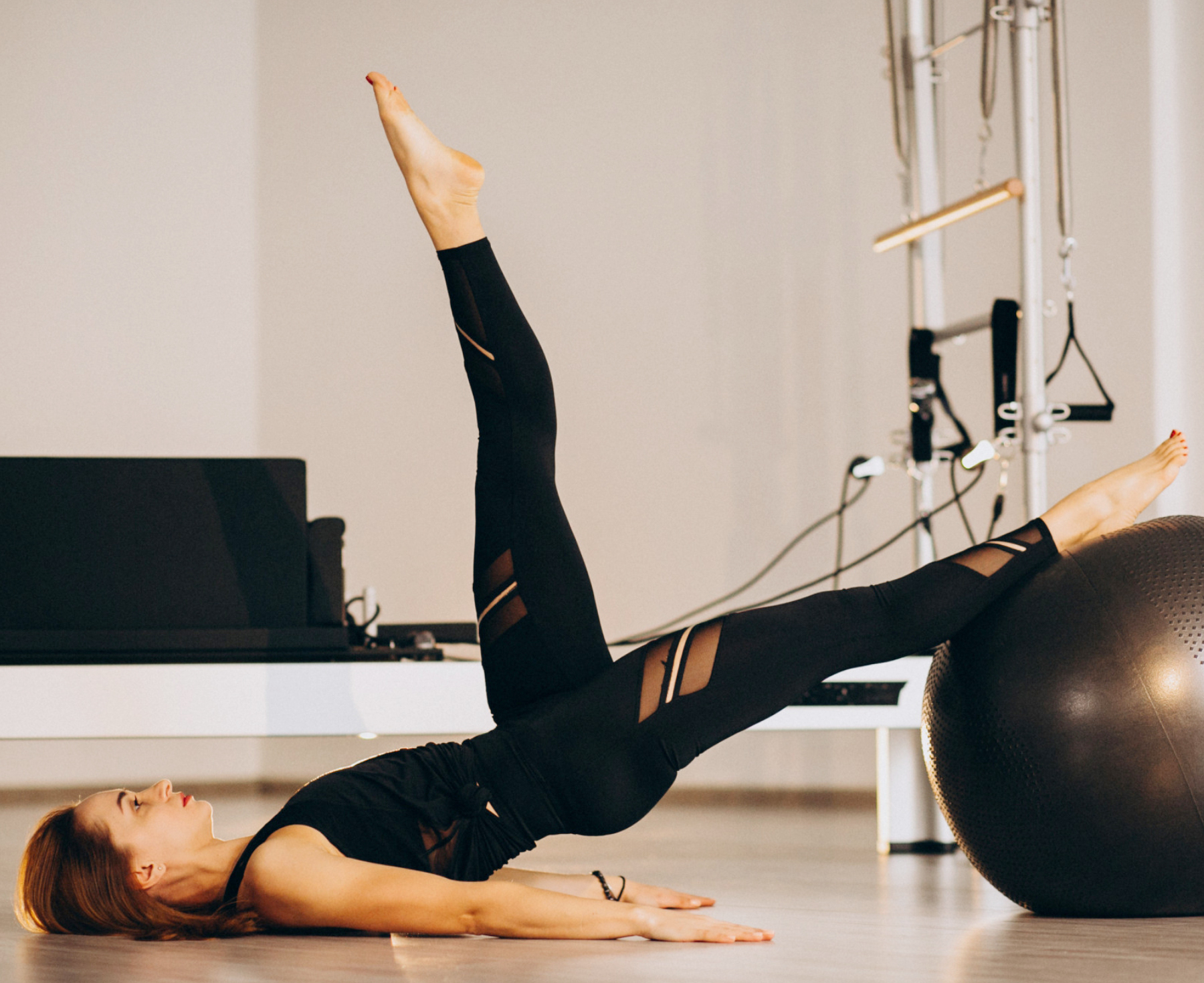
The progression should be slow; start with Mat Pilates or Clinical Pilates supervised by a trained professional, then progress to Reformer Pilates with progressive control.
Yoga & Pilates for Spine Health – Comparison
| Feature |
Yoga |
Pilates |
| Primary focus |
Mobility + Breath + Mindfulness |
Stability + Control + Strength |
| Spine benefit |
Flexibility & relaxation |
Core-driven spinal support |
| Breathing |
Diaphragmatic |
Focus on segmental breathing |
| Progression |
Flow-based |
Technique-based, structured |
| Best for |
Stress, stiffness, breath, wellness |
Desk users, postpartum, weak core, chronic back pain |
Which Should Women Choose?
-
Go for Yoga, if you are stiff & stressed. Start with slow, strength-based therapeutic Yoga instead of aggressive movements.
-
Chose Pilates, if you are unstable or weak around core & hips. Controlled strengthening can be a spine protection blueprint.
Over time, combining both Yoga and Pilates creates a resilient, supple, and balanced spinal system.
- Stability without flexibility leads to stiffness
- Flexibility without stability leads to strain
- The spine thrives on harmony between the two
Ideal Scenario
Most women benefit from both Yoga and Pilates, but in sequence:
- Phase 1: Pilates (stability first)
- Phase 2: Yoga (mobility & breath expansion)
Strong + flexible + well-regulated nervous system =
healthy spine
SPECIAL CONSIDERATIONS BY LIFE STAGE
| STAGE |
RECOMMENDATION |
| Menstrual cycle |
Yoga for cramps, Pilates for low-impact activation |
| Pregnancy |
Prenatal yoga + Guided Clinical Pilates |
| Postpartum |
Pilates first for core + pelvic floor → later yoga |
| PCOS / stress |
Yoga (nervous system balance) + light Pilates |
| Perimenopause & menopause |
Pilates for bone + postural strength |
When to Avoid or Modify the Approach?
- Severe disc issues
- Osteoporosis
- Recent childbirth or abdominal surgery
- Chronic hypermobility
- Sciatica or severe nerve symptoms
- Unresolved shoulder/hip pain
CSSH Recommendation
Best approach for women’s spine health
- Pilates for deep core, hips, & spinal stability
- Yoga for mobility, breath, & nervous system calm
Tailored guidance from a physiotherapist
- Pelvic floor needs
- Hormonal cycle influence
- Posture type
- Fascia and breathing mechanics
- Mobility vs stability balance
Final Thoughts
Your spine doesn’t need strength or flexibility. It needs intelligence in movement. Both Yoga and Pilates offer that intelligence in different languages. The key is to know which language your body speaks right now. At CSSH, we help women translate that language into confident, pain-free movement.
CSSH guides you towards a balanced blend of Yoga-inspired mobility and Pilates-based control, a system that strengthens your spine while nurturing your nervous system.
A strong spine moves elegantly.
A flexible spine stays strong with consistent support.